The Africa We Build Summit

Africa CEO Forum

Moving Beyond Potential: Key Takeaways from the 2026 Africa We Build Summit
For decades, the conversation around Africa’s economy has been trapped in the rhetoric of “unlocked potential.” But at the inaugural Africa We Build Summit held in Nairobi, Kenya, the tone shifted completely from abstract potential to hard-nosed execution.
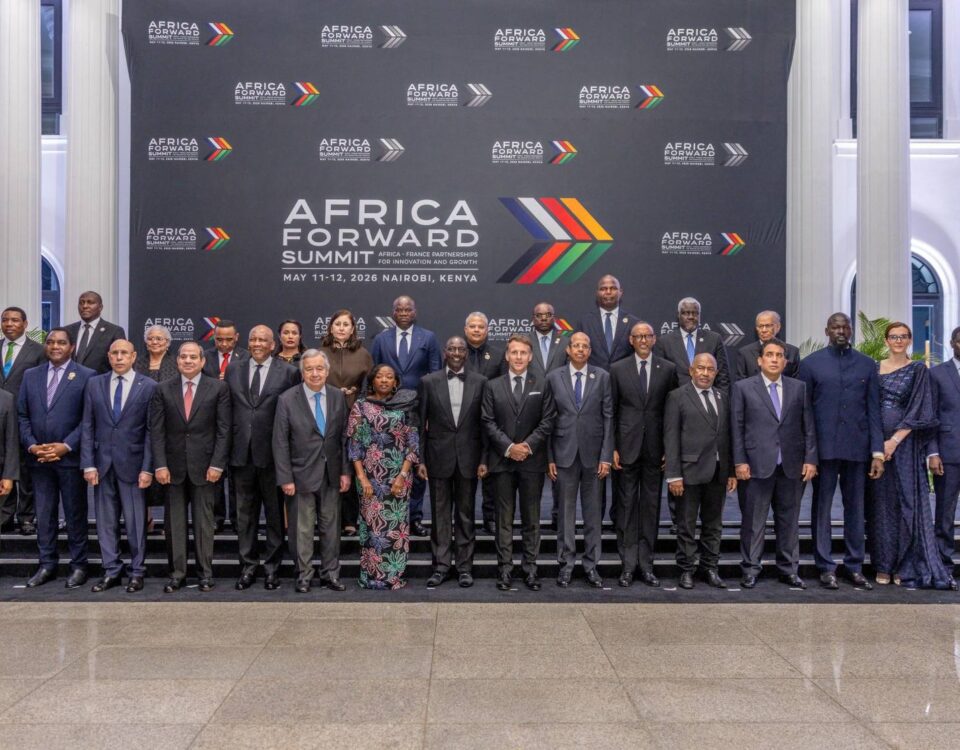
Hosted by the Africa Finance Corporation (AFC) in partnership with the Government of Kenya, the summit brought together Heads of State—including Kenya’s William Ruto and Uganda’s Yoweri Museveni—alongside industrial giants like Aliko Dangote. The core mission? Stop looking outward for aid and start leveraging the continent’s own wealth to build integrated infrastructure ecosystems.
Here are the major outcomes and paradigm shifts from the landmark event.
1. Unlocking the $4.4 Trillion “Trapped” Capital
The defining quote of the summit came from AFC President and CEO Samaila Zubairu: “Africa is not capital-poor; it is capital-trapped.”
The summit dismantled the myth that Africa lacks the money to close its $68 billion to $108 billion annual infrastructure deficit. According to AFC research data presented at the event, the continent is sitting on a massive domestic war chest:
- $4.4 trillion in total trapped domestic capital.
- $600 billion currently held in African pension funds.
- $400 billion in domestic insurance pools.
The Strategy: Leaders argued that shifting just 10% of these local pension and insurance pools into infrastructure would immediately unlock $40+ billion. This transition reduces dependency on foreign debt, which currently eats up massive chunks of national revenues across the continent.
2. Kenya’s Blueprint for Zero-Foreign-Debt Development
Host President William Ruto provided a concrete proof-of-concept for this domestic-first funding model. He revealed how Kenya is bypassing traditional foreign eurobonds and loans to fund massive civil projects:
- The Housing Levy Success: Kenya is currently building 240,000 housing units and 600 modern markets via a $4 billion pipeline—funded entirely by domestic resources through a national housing levy, without borrowing a single shilling externally.
- The New National Infrastructure Fund: Kenya’s Treasury announced a new $3 billion fund seeded by the privatization of public assets, explicitly designed to mobilize local institutional capital.
- Skin in the Game: To back this strategy, President Ruto announced a $25 million equity enhancement from the Kenyan government directly into the AFC.
3. The End of the “Mega-Donor” Raw Export Era
Uganda’s President Yoweri Museveni delivered a historical masterclass on the systemic “cost pushers” keeping Africa’s economy at $3.6 trillion despite its massive resources. The consensus was clear: Africa must stop exporting raw materials only to buy them back as finished goods.
The Gold Equation: President Museveni highlighted that raw gold exports yield roughly $60,000 per kilogram, whereas locally refined gold fetches $168,000.
To combat this value drain, countries are increasingly banning the export of raw materials—such as raw gold and uranium—demanding that local value-addition, processing, and mineral beneficiation happen within regional borders before shipping.
4. Shifting from Standalone Projects to “Economic Corridors”
The summit marked a formal departure from building isolated roads or power plants. The focus has pivoted to integrated economic ecosystems—connecting resources, clean energy, logistics, and markets seamlessly across borders.
| Priority Corridor | Strategic Scope | Impact Focus |
| The Northern Corridor | Connects the Port of Mombasa (Kenya) to Uganda, Rwanda, South Sudan, and eastern DRC. | Upgrading cross-border highways and advancing the East African Railway Master Plan. |
| The Lobito Corridor | Trans-continental logistics link cutting across central Africa. | Connecting resource-rich mining regions directly to maritime export hubs. |
5. Bureaucracy and the Visa Bottleneck
Industrialist Aliko Dangote issued a sharp, pragmatic warning to heads of state: capital and infrastructure are useless without the free movement of people. He pointed out the ongoing absurdity that a European passport holder can often travel across African nations more seamlessly than an African entrepreneur or investor. Siloing nations via intense visa restrictions remains a massive barrier to the success of the African Continental Free Trade Area (AfCFTA).
The Bottom Line
The Africa We Build Summit wasn’t a space for theoretical lecturing. It ended with concrete structural changes—including the formal signing of a Host Country Agreement making Nairobi the permanent regional hub for the Africa Finance Corporation.
By establishing localized infrastructure funds, clamping down on raw material extraction, and mapping out regional transport corridors, Africa’s leadership is drawing a line in the sand. The message out of Nairobi is clear: Africa is ready to finance, build, and own its future.